
©Arsen Petrovych/TVP
Sessions in the WHITE Room
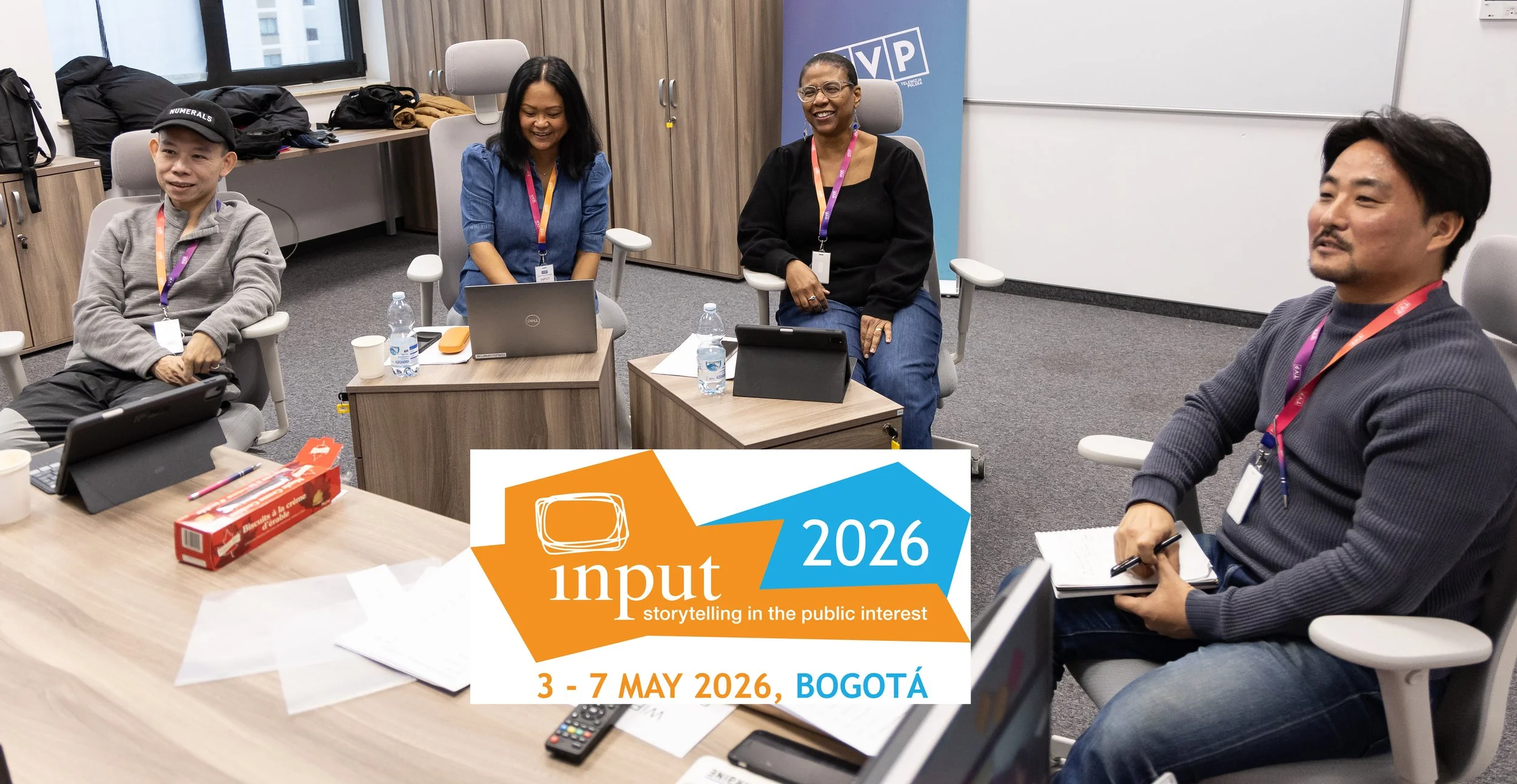
Your hosts in the WHITE Room will be Yang Lee (PTS, Taiwan), Marivel Taruc (CBC, Canada), Leslie Fields-Cruz (Black Public Media, USA), Taku Uchiyama (NHK, Japan)
No More DM’s: Can We Have a Real Conversation?
We are missing the most important parts of the message.
Today, we mostly talk through text messages, voice notes, and video calls. We lose facial expressions, tone of voice and body language. This session explores how public service media can help us step out of our digital bubbles.
Don’t Tell Me to Shut Up
Around the world, women from marginalized communities find themselves at the forefront of change, leaders of movements and models for inspiration. Why does systemic change often begin under the leadership of women?
When History Meets AI, Musicals, and Irony
The Best is Yet to be Discovered. How do we bridge the gap between cold, archival records and the vibrant pulse of human experience? This session explores creative approaches that rewrite the rules of historical storytelling.
War Normalized
Reporting the true face of terror. Facing the challenge of overcoming “compassion fatigue” to convey the reality of war in a world desensitized to violence.
The Price of Error: When Policies Hurt
Investigating System Failure. This session explores how public media can warn us before a crisis spirals out of control.
A Draft Roadmap for the Transition from "Using AI" to "Integrating AI" into the Heart of Storytelling.
From Functional Assistants to Invisible Workflows: Case Studies from Taiwan.
In the era of "AI Integration," public service media must redefine the boundary between technology and creativity.
The Ultimate Choice: from Bodily Autonomy to Digital Immortality
Do we have the right to decide how we live and when we die?This session explores how public media documents the extreme practice of bodily autonomy.
The Shield of Investigative Journalism
Harnessing technology to seek the truth. Today’s global landscape is increasingly fractured, where small injustices can rapidly escalate into human rights crises. How can investigative storytelling serve as a counter-narrative to this trend?